Turning a seasonal apple harvest into fresh cider is easier when your press matches your fruit volume, available workspace, and preferred level of hands-on effort. The right model can improve yield while making harvest-day processing more manageable.
We’ve gathered 10 cider presses ranging from compact wood-basket designs to large stainless steel hydraulic units. Use the guide below to compare capacity, pressure, materials, and practical features before choosing.
Best 10 Cider Presses for Seasonal Harvests Picks for 2026
Water-Powered Workhorse
Hydropress Cider Wine Fruit Press

- Uses garden-hose pressure up to 3 Bar
- Handles apples, pears, berries, and more
- Includes bag and splash-water protection
Best For: Home harvesters pressing mixed fruit batches
Hydraulic Stainless Press
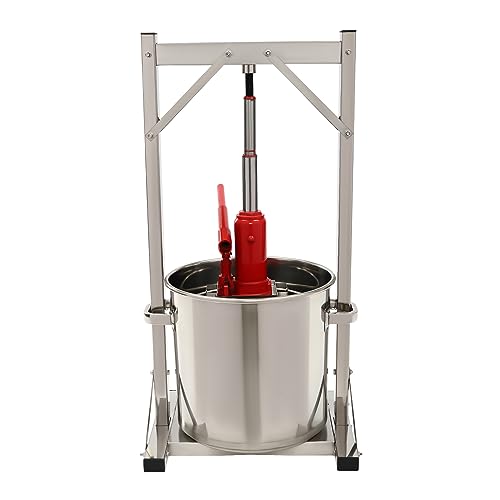
- 3-ton hydraulic jack supports pressing
- Uses 304 food-grade stainless steel inside
- Removable parts simplify cleaning
Best For: Moderate fruit batches and versatile home pressing
Heirloom Double-Tub Press
American Harvester Cider Press

- Combines grinding and squeezing
- Two-person operation can produce 50 gallons
- Hard maple and cast iron construction
Best For: Larger harvests with a two-person workflow
Generational Homestead Press

- Hard maple and cast iron construction
- Designed to last for generations
- Presses apples and fruit quickly
Best For: Homesteaders wanting a durable dedicated fruit press
High-Capacity Hydraulic Pick
5.8-Gallon Stainless Steel Cider Press

- Food-safe 304 stainless steel construction
- 6,613.87-pound hydraulic pressing force
- Large buckets for home or small-scale batches
Best For: High-volume seasonal fruit pressing
Traditional Wood-Basket Choice

- 3.17-gallon capacity for smaller batches
- Extended handle supports easier manual pressing
- Includes a filter bag for juice and wine
Best For: Home users and traditional fruit pressing
Stainless Steel Workhorse
5.8-Gallon Hydraulic Fruit Press

- Food-grade 304 stainless steel body
- 6,613.87-pound hydraulic pressing force
- Two-bucket design for larger fruit batches
Best For: Larger home or commercial harvest processing
Traditional Choice

- 18-liter basket for approximately 22–33 pounds of fruit
- T-handle design aims to reduce pressing effort
- Includes a filter bag for juice-making batches
Best For: Home users and small seasonal harvests
High-Capacity Workhorse

- 40-liter basket for large-batch processing
- Hydraulic jack delivers up to 5 tons of pressure
- Stainless-steel juice-contact components
Best For: Orchards and larger harvest-season batches
Versatile Batch Maker

- 30-liter capacity for substantial home batches
- 3-ton jack and 4 mm pressing plate support efficient extraction
- Includes two filter bags and a removable bucket
Best For: Multi-purpose home, farm, and orchard pressing
Water-Powered Workhorse – Hydropress Cider Wine Fruit Press
For seasonal harvests, the Hydropress Cider Wine Fruit Press uses garden-hose water pressure to press apples, pears, berries, and other fruit. Its 23.8-gallon listing includes 5.3- and 10.7-gallon capacity references, with pressure up to 3 Bar.
Best For: Home harvesters who want water-powered pressing for mixed fruit batches.
Pros:
- Uses convenient garden-hose water pressure.
- Works with pears, apples, berries, and more.
- Includes a press bag and splash-water protection.
- Sheet-metal gap is designed for better output.
Cons:
- At 79 pounds, it is not especially lightweight.
- Capacity information lists multiple smaller working capacities, so buyers should confirm the intended batch size.
This is a practical choice when easy water-powered operation matters more than portability. Confirm the usable capacity and allow room for its 35-by-26-by-26-inch package.
Hydraulic Stainless Press – 22L Cider Press and Crusher
This 22L cider press combines a 3-ton hydraulic jack with a large 5.8-gallon capacity, making it a capable option for seasonal harvests and home brewing. Stainless-steel barrels and removable parts support hygienic use and easier cleanup.
Best For: Families, wineries, and restaurants needing a manual hydraulic press for fruit and other ingredients.
Pros:
- Uses durable 201 stainless steel and 304 food-grade stainless steel.
- Hydraulic system and distributed filter holes support efficient extraction.
- Removable parts make thorough cleaning easier.
- Can also press honey, chili oil, boiled herbs, and rice wine.
Cons:
- The 5.8-gallon capacity may be limiting for larger harvests.
- Manual hydraulic operation requires user effort.
With its food-grade inner barrel and flexible applications, this press suits buyers who value cleanability and versatility. Its listed capacity is best matched to moderate batches rather than high-volume production.
Heirloom Double-Tub Press – American Harvester Cider Press
The American Harvester Cider Press combines grinding and squeezing in a double-tub design, making it suited to cider presses for seasonal harvests. Its Apple Eater grinder prepares apples to a fine texture, while hard maple and cast iron construction is intended for long-term use.
Best For: Two-person harvest pressing when high afternoon output and traditional construction are priorities.
Pros:
- Grinds and presses in one setup.
- Designed for two-person operation.
- Claimed capacity of up to 50 gallons in an afternoon.
- Uses hard maple and cast iron construction.
Cons:
- Two-person operation is required for the stated workflow.
- The supplied notes do not specify dimensions or weight for storage planning.
This is the strongest fit for larger family harvests and buyers seeking a durable, traditional press-and-grinder combination. Plan for a dedicated setup area and an extra operator.
Generational Homestead Press – Homestader Apple Cider Press
The Homestader Fruit and Apple Cider Press by Happy Valley Ranch is built for straightforward seasonal harvest pressing. Hard maple and cast iron construction is intended to last for generations, while the design focuses on pressing apples and fruit quickly for maximum juice.
Best For: Homesteaders and families seeking a durable, dedicated apple and fruit press.
Pros:
- Hard maple and cast iron construction.
- Designed for long-term, generational use.
- Presses apples and fruits quickly.
- Focuses on maximizing juice yield.
Cons:
- The supplied notes do not specify capacity.
- No dimensions or weight are provided for setup planning.
This press is appealing when longevity and focused fruit pressing matter most. Buyers with unusually large harvests should verify capacity and available space before choosing it.
High-Capacity Hydraulic Pick – 5.8-Gallon Stainless Steel Cider Press
For seasonal harvests, this stainless steel hydraulic press is designed for larger home batches and small-scale processing. Its 22-liter capacity, strong hydraulic jack, and food-safe construction make it a practical option for pressing fruit, vegetables, wine ingredients, honey, and more.
Best For: Home batch production and small-scale processing where low-effort pressing and easy cleanup matter.
Pros:
- Food-safe 304 stainless steel construction resists corrosion and is easy to clean.
- Hydraulic jack provides up to 6,613.87 pounds of pressing force with less fatigue.
- Large 5.81-gallon outer bucket and 2.91-gallon filter bucket support substantial batches.
- Triangular-bracket reinforcement and a compact footprint improve stability and space efficiency.
Cons:
- Hand-wash care is required.
- The hydraulic design may be more equipment than needed for very small batches.
This is a strong choice among cider presses for seasonal harvests if you want high capacity and powerful, controlled extraction in a compact stainless steel setup.
Traditional Wood-Basket Choice – 12-Liter Manual Fruit Press
This traditional wood-basket press offers a straightforward approach to cider presses for seasonal harvests. The 3.17-gallon capacity, extended pole handle, and included filter bag suit home users who want to press fruit such as apples or grapes without relying on a hydraulic system.
Best For: Family parties, home fruit pressing, small eateries, and fresh-squeezed juice use.
Pros:
- Extended hand shank and spiral, phase-in pressing design are intended to reduce effort.
- Thick press plate and broad pressing area are designed to improve juice yield.
- Can process fruit as well as vinasse, oil pomace, and honeycomb.
- Includes one filter bag for straining juice or wine.
Cons:
- Its 3.17-gallon capacity is smaller than the larger stainless steel alternatives.
- Painted wood construction may require more care than a stainless steel press.
With its vintage appearance and manual pole handle, this model is a fitting pick for smaller seasonal harvests and users who value a traditional pressing method.
Stainless Steel Workhorse – 5.8-Gallon Hydraulic Fruit Press
For harvesters looking for durable cider presses for seasonal harvests, this 5.8-gallon stainless steel model combines a food-grade build with hydraulic pressing power. Its two-bucket design is suited to extracting juice or wine from sizable fruit batches while keeping the frame stable during use.
Best For: Home or commercial users processing larger amounts of apples and other fruit.
Pros:
- Food-grade 304 stainless steel construction is rust-proof and hygienic according to the supplied specifications.
- Hydraulic jack delivers up to 6,613.87 pounds of pressure to reduce manual effort.
- 5.81-gallon outer barrel and 2.91-gallon filter barrel support efficient batch processing.
- Thickened materials and triangular brackets provide a stable frame with a stated 330.69-pound load capacity.
Cons:
- The supplied details do not specify a compact footprint or included accessories beyond the press itself.
- Its larger capacity may be unnecessary for occasional, small-volume pressing.
This press emphasizes capacity, hydraulic force, and stability, making it a sensible option when seasonal harvests produce enough fruit to justify a heavier-duty setup.
Traditional Choice – 18L Wooden Fruit Cider Press
For smaller seasonal harvests, this manual wooden press offers an approachable way to make fresh juice and cider. Its 18-liter basket and T-shaped handle are suited to household batches of apples, grapes, and other fruit.
Best For: Families, parties, small eateries, and fresh-squeezed juice setups.
Pros:
- 18-liter capacity can handle approximately 22–33 pounds of fruit at a time.
- T-shaped handle and phase-in pressing design aim to reduce effort.
- Thicker pressing plate and larger stressed area support thorough juice extraction.
- Includes one filter bag and can also press items such as vinasse, oil pomace, and honeycomb.
Cons:
- Manual operation requires hands-on pressing.
- Hand-wash-only care may require more cleanup time.
- Its 18-liter capacity is smaller than the larger hydraulic models in this roundup.
This is a practical pick for buyers seeking cider presses for seasonal harvests without moving into large orchard-scale equipment. The traditional wood construction and moderate capacity fit occasional home use.
High-Capacity Workhorse – 40L Hydraulic Cider Press
Designed for substantial seasonal harvests, this 40-liter hydraulic press combines a large basket with up to 5 tons of pressure. Its stainless-steel juice-contact components and adjustable tray make it suitable for repeated batch work at home or in an orchard.
Best For: Orchard owners, harvest-season processing, parties, and larger home or small-scale juice operations.
Pros:
- Large 40-liter capacity supports bigger batches at one time.
- Hydraulic jack supplies up to 5 tons of pressing force.
- AISI 304 stainless steel is used for the pressing plate, basket, and juice tray.
- Adjustable tray height and a 90-degree-turning beam help with loading and container placement.
Cons:
- At 85 pounds, it is considerably heavier than smaller manual presses.
- The larger frame requires more storage and setup space.
- Hydraulic operation adds equipment complexity compared with a basic hand press.
Among these cider presses for seasonal harvests, this model stands out when throughput and pressing force matter most. It is also versatile for herbs, nut milks, honey, and other pressing tasks.
Versatile Batch Maker – 30L Hydraulic Fruit Press
This 30-liter hydraulic press is a versatile middle-ground option for cider and juice making. Its 3-ton jack, thickened pressing plate, removable bucket, and two filter bags support efficient batch processing in kitchens, orchards, farms, and wineries.
Best For: Home users and small farms wanting one press for fruit, vegetables, herbs, honey, and fermented mash.
Pros:
- 30-liter capacity accommodates larger batches than a small household press.
- Jack-style design provides a maximum load capacity of 3 tons.
- 4 mm thickened pressing plate is designed for stronger, more efficient pressing.
- Removable bucket simplifies rinsing, and two filter bags are included.
Cons:
- At 57.8 pounds, it is not as portable as a compact hand press.
- Fruit may need to be cut first for better pressing results.
- Its capacity and pressure are below the larger 40-liter, 5-ton model.
For buyers comparing cider presses for seasonal harvests, this VEVOR model balances batch size, hydraulic assistance, and broad application range. It is a strong fit when the press needs to handle more than apples and grapes.
How We Picked the Best Cider Presses for Seasonal Harvests
We focused on the factors that matter most during a real harvest: usable capacity, pressing power, construction, cleanup, stability, and ease of operation. The selection includes manual basket presses, hydraulic models, and press-and-crusher combinations so different households and small producers can find an appropriate fit.
Capacity labels can be confusing because they may describe the basket, hopper, or approximate fruit volume. Treat the listed gallon or liter rating as a starting point, then check the manufacturer’s dimensions and recommended batch size before buying.
Quick Comparison
- Compact batches: The 12L and 18L-class presses suit occasional home use, small gardens, and users who prefer lighter equipment.
- Everyday family harvests: Models around 22L to 30L offer a practical balance of batch size, control, and storage.
- Large harvests: The 40L and 23.8-gallon options reduce the number of press cycles when processing substantial quantities of fruit.
- Higher-efficiency workflows: Presses with integrated grinders or crushers can save time by preparing apples or grapes before pressing.
Key Buying Factors for Cider Presses for Seasonal Harvests
Capacity and Batch Planning
Choose a basket large enough to reduce repetitive loading, but not so large that it becomes difficult to fill, operate, or clean. A smaller press may be more efficient if you harvest gradually or process fruit alone.
Pressing Method and Pressure
Manual screw or T-handle presses are straightforward and do not require hydraulic equipment. Hydraulic jacks can apply greater, more consistent force with less physical effort, but they add weight, cost, and more parts to maintain. Pressure ratings are useful comparisons, but juice yield also depends on fruit variety, ripeness, grinding, and drainage.
Materials and Cleanup
Stainless steel components are generally convenient for food contact and corrosion resistance. Wood baskets can offer a traditional appearance and effective drainage, but they require careful washing and thorough drying. Look for removable parts, accessible surfaces, and a tray with a controlled pouring edge.
Stability and Workspace
A wide, rigid base helps prevent rocking as pressure increases. Confirm the press’s footprint, operating height, and total weight, especially if it will be stored between harvests. A crusher attachment may also need extra clearance and a separate collection container.
Who Should Buy Which Cider Presses for Seasonal Harvests?
Choose a compact manual press if you process modest quantities, value portability, or want a simple tool for occasional cider and juice making. Choose a mid-size hydraulic press if you want more pressing force and regularly handle several batches of apples, grapes, or other soft fruit.
Choose a large-capacity hydraulic model for substantial seasonal harvests, shared family use, or small-scale production where reducing cycle count matters most. Choose a press-and-crusher combination when you want a more complete workflow and do not already own a suitable fruit crusher.
Before ordering, verify the included accessories, hydraulic-jack specifications, food-contact materials, replacement-part availability, and cleaning instructions. Those details often determine whether a press remains convenient after the first harvest.