Making pasta for a crowd requires more than a capable cutter. The best machine should process dough efficiently, maintain consistent thickness, and match your available space, power, and production volume.
We selected 10 options ranging from heavy-duty floor models and automatic extruders to compact electric and manual machines. Use the guide below to compare capacity, convenience, durability, and the type of pasta each machine can produce.
Best 10 Pasta Machines for Large Batches Picks for 2026
Heavy-Duty Workhorse
YIMOHOME Commercial Electric Pasta Maker

- Up to 66 lb/hr claimed output
- 750W motor with stainless-steel components
- Handles noodles, sheets, and wrappers
Best For: Restaurants and high-volume home production
Compact Italian Production
Omcan 13397 Floor Model Pasta Machine

- 13 lb hourly output listed
- 1 HP motor with motorized cutters
- Italian-made 220V floor model
Best For: Professional kitchens with moderate batch needs
Family-Batch Convenience
Philips 7000 Series Pasta Maker

- Makes up to 8 portions
- Pasta ready in under 10 minutes claimed
- Eight discs and dishwasher-safe parts
Best For: Families and home entertaining
Maximum Floor-Model Output
Omcan 16643 Italian Pasta Machine

- 55 lb/hr output listed
- 26 lb tank and 1.5 HP motor
- Italian stainless-steel floor model
Best For: High-volume commercial pasta production
Commercial Workhorse
15-20kg/h Automatic Pasta Extruder

- 15-20kg/h commercial output
- Three interchangeable dies included
- Stainless steel body with casters
Best For: Restaurants, cafés, and food stalls needing high-volume extrusion
Classic Manual Pick
Marcato Atlas 180 Pasta Machine

- Chrome-plated steel construction
- Makes lasagne, fettuccine, and tagliolini
- Ten listed thickness settings
Best For: Home cooks who prefer manual control and classic pasta formats
Home Batch Option
VEVOR 500g Automatic Noodle Maker

- Makes about four servings in 14 minutes
- Eight pasta shapes and four automatic modes
- Includes measuring and cleaning accessories
Best For: Home kitchens preparing family-sized noodle batches
Best Electric Upgrade
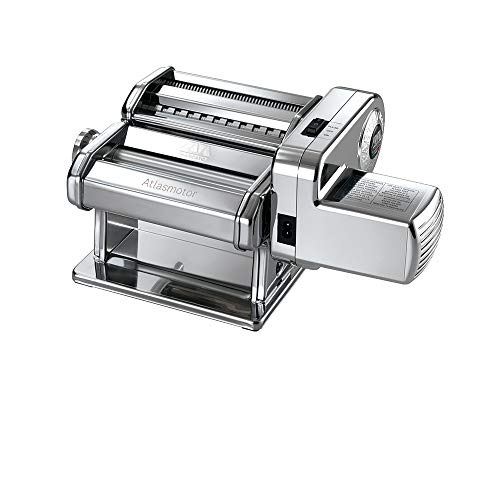
- Included electric motor plus handcrank
- 6-inch sheets with 10 thickness settings
- Made and assembled in Italy
Best For: Larger batches with flexible electric or manual operation
Best Heavy-Duty Manual

- Solid chromed steel construction
- Makes sheets, fettuccine, and tagliolini
- Compatible with an optional motor
Best For: Manual batch cooking with room to expand
Best Straightforward Value

- Manual machine for three classic pasta shapes
- 10 thickness settings
- Chrome- and nickel-plated steel construction
Best For: Simple manual preparation of lasagna and cut noodles
Heavy-Duty Workhorse – YIMOHOME Commercial Electric Pasta Maker
For restaurants, catering kitchens, or serious home cooks comparing pasta machines for large batches, this YIMOHOME model emphasizes throughput, sturdy construction, and versatility. Its 750W motor, stainless-steel roller and cutter, and claimed output of up to 66 pounds per hour make it suited to frequent production.
Best For: Restaurants, small food businesses, and large households needing noodles, sheets, or dumpling wrappers in volume.
Pros:
- Claims production of 45–66 pounds of fresh noodles per hour.
- Combines kneading, pressing, and cutting in one machine.
- 304-grade stainless-steel roller and cutter with a 750W motor and cast-iron gears.
- Supports multiple noodle widths and dough thicknesses, including dumpling and wonton skins.
Cons:
- At about 46 pounds, it requires a dedicated, sturdy workspace.
- The commercial design may be more machine than occasional users need.
- Its 110V electrical setup may not suit every commercial kitchen.
This is the strongest all-around choice here for buyers who want one electric machine to handle both pasta and rolled dough at substantial volume. Its size and weight are worth considering before purchase.
Compact Italian Production – Omcan 13397 Floor Model Pasta Machine
Omcan 13397 (PM-IT-0015) Floor Model Pasta Machine 220V with 13-lb Capacity, 1 HP
Check Price On AmazonWhen evaluating pasta machines for large batches, the Omcan 13397 offers a commercial floor-model format with a 13-pound capacity and motorized cutters. Its 1 HP motor and 220V configuration make it a better fit for an appropriately equipped professional kitchen than a typical home counter.
Best For: Commercial kitchens that need a floor-standing Italian-made machine for regular pasta production.
Pros:
- Lists a 13-pound hourly pasta output and 33-pound maximum output.
- Includes motorized cutters and fan coolers.
- Uses a 1 HP motor and is crafted in Italy.
- CE listed and QPS approved according to the supplied specifications.
Cons:
- Requires a 220V, 60Hz, single-phase connection.
- Its listed capacity is lower than the higher-output Omcan model in this roundup.
- The floor-model format is not intended for small kitchens.
The 13397 is a practical middle ground for professional users who want an Italian floor machine without moving up to the largest listed capacity. Confirm electrical compatibility and available floor space first.
Family-Batch Convenience – Philips 7000 Series Pasta Maker
The Philips 7000 Series is a convenient option for households seeking pasta machines for large batches without stepping up to commercial equipment. It can prepare up to eight portions in one go, offers automatic operation, and includes eight shaping discs for varied homemade pasta.
Best For: Families and hosts who want fresh pasta quickly with minimal hands-on work.
Pros:
- Prepares pasta in under 10 minutes according to the supplied claim.
- Handles up to eight portions in one batch.
- Includes eight discs for different pasta shapes.
- Non-stick, dishwasher-safe parts simplify cleanup.
Cons:
- Its eight-portion capacity is designed for home-scale batches rather than restaurant production.
- The 150W motor is substantially less powerful than the commercial models listed.
- The supplied details do not specify hourly commercial output.
For family meals, this Philips model prioritizes speed and simplicity over industrial throughput. Choose it when eight portions meet your needs and easy cleanup matters more than continuous production.
Maximum Floor-Model Output – Omcan 16643 Italian Pasta Machine
Omcan 16643 Italian Heavy-Duty Pasta Machine Floor Model 55 lb (25 kg) capacity
Check Price On AmazonFor buyers prioritizing pasta machines for large batches, the Omcan 16643 is the highest-output option in this selection. Its 26-pound tank, stated 55-pound-per-hour output, 1.5 HP motor, and automatic operation are aimed squarely at demanding commercial production.
Best For: Restaurants, pasta businesses, and commercial kitchens producing up to 55 pounds of pasta per hour.
Pros:
- Lists 55 pounds of output per hour with a 26-pound tank capacity.
- Uses a 1.5 HP motor and automatic operation.
- Made in Italy with a stainless-steel construction.
- Includes the cutting assembly, with additional dies available separately.
Cons:
- Requires a 220V, 60Hz, single-phase electrical supply.
- Additional pasta dies are sold separately.
- Its large floor-model dimensions require substantial dedicated space.
This is the clearest choice for sustained commercial volume among the four products. Its power, capacity, and output come with higher infrastructure needs, so verify the electrical connection, footprint, and die requirements before ordering.
Commercial Workhorse – 15-20kg/h Automatic Pasta Extruder
For restaurants, cafés, and food stalls comparing pasta machines for large batches, this automatic stainless steel extruder stands out for its 15-20kg/h output. It uses a 2.2KW motor, operates on 110V, and includes three interchangeable dies for producing several pasta shapes.
Best For: Small to medium commercial operations that need high-volume, shape-varied pasta production.
Pros:
- Produces approximately 15-20kg of pasta per hour for commercial use.
- Includes Fusilli, spaghetti, and penne dies, with support for additional shapes.
- Stainless steel construction, a large hopper, and a thread transmission shaft support consistent extrusion and easier cleaning.
- Built-in handles and four anti-slip casters make repositioning easier.
Cons:
- At 220 pounds, it is substantially heavier than home-oriented machines.
- The machine has a single listed operating setting, so flexibility comes mainly from changing dies.
This is the strongest fit here when throughput is the priority. Its commercial capacity and mobile design are useful for busy kitchens, though the size and weight make it excessive for occasional household pasta making.
Classic Manual Pick – Marcato Atlas 180 Pasta Machine
The Marcato Atlas 180 takes a hands-on approach to pasta production. While it is not designed for the throughput of commercial pasta machines for large batches, its chrome-plated steel build and three integrated pasta formats make it a practical choice for cooks who value manual control.
Best For: Home cooks who prefer hand-operated pasta making and prepare repeated batches of lasagne, fettuccine, or tagliolini.
Pros:
- Made and assembled in Italy with chrome-plated steel construction.
- Produces lasagne, fettuccine, and tagliolini.
- Ten listed settings provide control over the pasta-making process.
- Anodized aluminum rollers are designed for food processing.
Cons:
- Manual operation requires more time and effort for large batches.
- Its listed formats are less varied than the extruding machines in this roundup.
- Hand washing is recommended.
The Atlas 180 is best viewed as a durable manual roller rather than a high-output production machine. It suits cooks who want control over classic flat and ribbon pasta, but it is not the most efficient choice for commercial-scale quantities.
Home Batch Option – VEVOR 500g Automatic Noodle Maker
For smaller household batches, this 150W automatic machine offers a convenient alternative to manual preparation. Its 500g flour capacity can make enough noodles for about four people in roughly 14 minutes, making it a useful entry among pasta machines for large batches when “large” means a family-sized serving rather than commercial production.
Best For: Home kitchens making fresh noodles for approximately four people at a time.
Pros:
- Four automatic modes simplify mixing, kneading, and extrusion.
- Eight pasta discs provide a range of noodle shapes.
- Includes flour and liquid measuring cups, a spatula, cleaning brush, and instructions.
- Removable parts are dishwasher-safe, according to the supplied notes.
Cons:
- The 500g flour capacity is limited compared with the commercial machine.
- Incorrect flour-to-water ratios can cause sticking or prevent dough from passing through.
- It is intended for home-scale production rather than continuous commercial output.
This VEVOR model prioritizes convenience and variety over volume. It is a sensible choice for family meals and beginner-friendly automation, but buyers needing several kilograms per hour should look to a commercial extruder instead.
Best Electric Upgrade – Marcato Atlasmotor 150
For cooks comparing pasta machines for large batches, the Marcato Atlasmotor combines manual control with an included electric motor. It makes sheets up to 6 inches wide and offers 10 thickness settings for repeatable results.
Best For: Home cooks who want the flexibility of electric or manual operation when preparing larger quantities of fresh pasta.
Pros:
- Includes the Atlas 150, handcrank, clamp, Pastadrive motor, and manual.
- Creates pasta sheets up to 150mm/6 inches wide.
- Offers 10 clear thickness positions.
- Made and assembled in Italy; compatible with 11 separately available Marcato accessories.
Cons:
- The motor and included components make it heavier at 9.5 pounds.
- Additional pasta-shape accessories are sold separately.
This is the most convenient choice of the three for reducing hand-cranking during extended prep, while still preserving manual operation when preferred.
Best Heavy-Duty Manual – Imperia iPasta Classic Line
The Imperia iPasta Classic Line is a strong manual option for pasta machines for large batches, with chromed steel construction, a 150mm sheet width, and six adjustable roller heights. Its side slot also allows a compatible motor to be added later.
Best For: Pasta makers who want a durable manual machine with multiple built-in pasta formats and a future motor-upgrade path.
Pros:
- Heavy-duty chromed steel construction made entirely in Italy.
- Produces sheets, 6.5mm fettuccine, and 2mm tagliolini.
- Six roller heights range from 0.5mm to 5mm.
- Includes crank, clamp support, non-slip base, storage pouch, and cleaning brush.
Cons:
- The compatible electric motor is not included.
- Extra Duplex, Simplex, or Raviolamp accessories are sold separately.
Its solid construction and included supports make it a practical manual workhorse, while the motor-compatible design leaves room to streamline larger sessions later.
Best Straightforward Value – Marcato Atlas150 Manual
MARCATO Atlas150 Manual Pasta Maker Machine-LASAGNA, FETTUCCINE & TAGLIOLINI. Made in Italy
Check Price On AmazonThe Marcato Atlas150 Manual is a straightforward choice among pasta machines for large batches, pairing a chrome-steel body with dedicated cutters for lasagna, fettuccine, and tagliolini. Its 10-position adjustment provides useful control over sheet thickness.
Best For: Home cooks seeking a compact manual machine for classic pasta shapes and repeatable thickness adjustments.
Pros:
- Includes the pasta maker, black crank handle, and user manual.
- Designed for lasagna, fettuccine, and tagliolini.
- Provides 10 thickness settings from 0.8mm to 4.8mm.
- Uses chrome-plated and nickel-plated steel components.
Cons:
- It requires manual cranking.
- The supplied notes do not list an included clamp or motor.
This model keeps the setup simple and focused on core pasta shapes, making it a sensible pick when you want manual batch preparation without an electric package.
How We Picked the Best Pasta Machines for Large Batches
We evaluated these machines by looking at dough capacity, production speed, motor or drive system, construction, pasta-shape flexibility, and ease of cleaning. Commercial floor models receive attention for high-volume production, while countertop machines are judged on practical batch size, storage, and ease of use.
Because “large batch” means something different in a restaurant than in a family kitchen, the list includes both professional equipment and more accessible machines. Capacity figures should be treated as manufacturer specifications, and actual output can vary with dough hydration, pasta shape, operator experience, and required drying or cutting time.
Quick Comparison
| Machine type | Best suited to | Main advantage | Key limitation |
|---|---|---|---|
| Commercial floor model | Restaurants, catering, production kitchens | Large capacity and durable operation | Higher cost, weight, and space requirements |
| Automatic countertop extruder | Frequent home or small-batch use | Hands-off mixing and shaping | Usually fewer dough and shape options |
| Electric roller and cutter | Home cooks making repeated batches | Faster rolling with less manual effort | Often requires separate dough preparation |
| Manual roller and cutter | Occasional users and traditional preparation | Simple, compact, and easy to control | Requires more physical effort |
Key Buying Factors for Pasta Machines for Large Batches
Capacity and Throughput
Check both the stated dough or flour capacity and the expected hourly output. A 13-pound or 55-pound floor model is designed for a very different workload than a countertop machine rated for a few hundred grams. Avoid choosing solely by motor wattage; continuous throughput and cooling requirements matter more for repeated batches.
Roller, Extruder, or Both
Roller machines are ideal for lasagne sheets, fettuccine, and tagliolini. Extruders are better for tubular and shaped pasta such as penne, macaroni, fusilli, or conchiglie. If your menu includes both sheet and extruded pasta, confirm whether dies or cutting attachments are included.
Construction, Power, and Installation
Stainless steel and chrome components are useful in busy kitchens because they resist wear and are easier to wipe down. Commercial 220-volt machines may require dedicated electrical service, while 110-volt and manual models are simpler for home installation. Measure the machine’s footprint, height, clearance, and storage path before ordering.
Cleaning and Workflow
Look for removable dies, accessible rollers, and manufacturer-approved cleaning instructions. Never assume every component is dishwasher-safe. A machine that is slightly slower but faster to clean may produce more usable pasta during a busy service.
Who Should Buy Which Pasta Machines for Large Batches?
Choose a heavy-duty floor model if you operate a restaurant, catering business, or production kitchen and need repeatable output with minimal downtime. Prioritize capacity, electrical compatibility, service support, and available workspace.
Choose an automatic countertop model if you want mixing, kneading, and shaping handled with limited supervision. These are convenient for households and small operations that value consistency over maximum throughput.
Choose an electric roller if you already make dough and mainly need help processing repeated sheets and noodles. It offers a useful balance between control and speed.
Choose a manual Marcato or Imperia-style machine if you make pasta occasionally, have limited counter space, or prefer a simple machine with fewer parts to maintain. Manual models can still handle family-size batches when the dough is divided into manageable portions.