Processing apples, grapes, or berries by the bucketful requires more than a basic kitchen juicer. The best fruit presses for large batches combine generous capacity, sturdy construction, efficient pressure, and easy cleanup so you can produce more juice with less effort.
This roundup compares 10 high-capacity manual and hydraulic presses, from compact stainless-steel models to 40-liter machines designed for serious home production and small-scale winemaking.
Best 10 Fruit Presses for Large Batches Picks for 2026
High-Capacity Hydraulic Pick

- 10.6-gallon capacity for large batches
- 5-ton hydraulic pressure
- 304 stainless steel juice-contact parts
Best For: Orchards and harvest-season pressing
Stable Stainless-Steel Workhorse

- 5.28-gallon batch capacity
- Reinforced anti-tip base
- Detachable design for easier cleaning
Best For: Homes, wineries, and restaurants
Traditional Manual Favorite
4.75-Gallon Wooden Basket Press
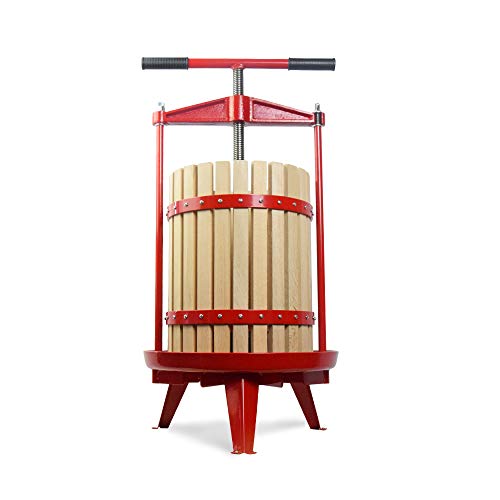
- Presses about 22–33 pounds at once
- T-handle manual operation
- Includes a filter bag
Best For: Families, parties, and small operations
Reinforced Hydraulic Extractor

- 5.81-gallon outer barrel
- 6,613.87-pound hydraulic force
- Food-grade 304 stainless steel
Best For: Cider, wine, and juice production
Sturdy Manual Pick
7.9-Gallon Beech Wood Fruit Press
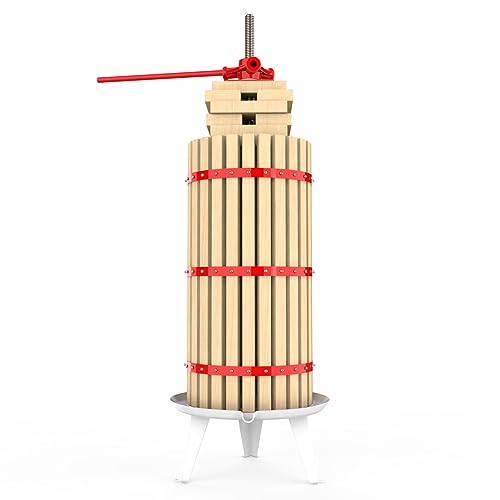
- 7.9-gallon capacity for larger home batches
- Beech wood basket with heavy-duty stand
- Quiet manual pressing with built-in pour spout
Best For: Home cider, juice, and wine making
Low-Effort High-Capacity Pick
10.7-Gallon Hydraulic Fruit Press

- 40-liter capacity for substantial batches
- Uses household water pressure instead of muscle power
- Stainless steel design includes filter bag and splash guard
Best For: High-volume family, catering, or small commercial use
Compact Stainless-Steel Pick
3.69-Gallon T-Handle Fruit Press
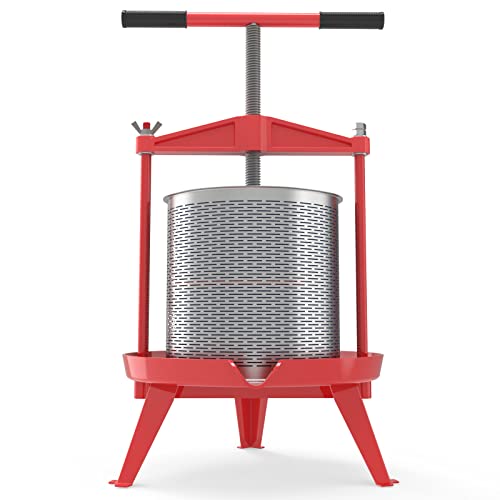
- 14-liter stainless steel basket
- Acme screw and T-handle reduce pressing effort
- Detachable basket simplifies cleanup
Best For: Home brewing and moderate harvest-season batches
Best with Extra Features
22L Stainless Steel Fruit Press

- 5.81-gallon outer barrel for larger pressing sessions
- Hydraulic jack helps reduce manual effort
- Includes filter bucket for finer juice or wine
Best For: Home users and small producers pressing fruit, vegetables, or honey
Stable Heavy-Duty Option
- 5.28-gallon capacity for substantial batches
- Hydraulic operation helps save labor
- Reinforced H-shaped base improves stability
Best For: Home and commercial users pressing apples, grapes, or berries
Largest-Batch Choice
VEVOR 30L Hydraulic Wine Press

- 7.93-gallon capacity maximizes batch size
- 4 mm pressing plate supports efficient extraction
- Includes two filter bags and a removable bucket
Best For: Orchards, farms, wineries, and kitchens handling the largest batches
High-Capacity Hydraulic Pick – 10.6-Gallon Mosakar Press
For fruit presses for large batches, the Mosakar stands out with a 10.6-gallon capacity and 5 tons of hydraulic pressure. Its stainless steel juice-contact components and adjustable tray make it suited to repeated seasonal pressing.
Best For: Home orchards, harvest-season processing, and users pressing apples, grapes, herbs, nut milks, or honey.
Pros:
- Large 40-liter capacity for substantial batches
- 5-ton hydraulic jack helps maximize juice extraction
- AISI 304 stainless steel basket, plate, and tray resist acidic juice and are easy to clean
- Adjustable tray height and a 90-degree-turning beam simplify loading and container placement
Cons:
- At 85 pounds, it is relatively heavy to move
- The 20-by-17.3-by-31.6-inch frame needs dedicated storage space
This is a strong choice when capacity and pressing force matter most. The durable frame and adjustable setup add practicality, though its size and weight favor a permanent or semi-permanent workspace.
Stable Stainless-Steel Workhorse – 5.28-Gallon Hydraulic Press
This 5.28-gallon model is a practical option among fruit presses for large batches, combining a reinforced stainless-steel-and-iron build with a hydraulic jack rated at 6,613.87 pounds of load-bearing force. Its braced base is designed to stay steady during pressing.
Best For: Homes, wineries, and restaurants processing berries, grapes, oranges, and similar fruit.
Pros:
- 5.28-gallon capacity handles sizeable batches
- H-shaped base, triangular feet, and reinforcing rods improve anti-tip stability
- Detachable, smooth-surface design supports easier cleaning
- Manual operation reduces energy use and fruit oxidation
Cons:
- Hand-wash care is required
- The listing gives conflicting capacity information, identifying the model as 20 liters while also stating 14 liters in the details
Its stability-focused structure makes this a sensible pick for users who want hydraulic assistance without stepping up to the largest capacity. Verify the actual usable capacity before ordering.
Traditional Manual Favorite – 4.75-Gallon Wooden Basket Press
For shoppers seeking fruit presses for large batches without hydraulic equipment, this traditional wooden-basket model offers a 4.75-gallon capacity and a T-shaped hand crank. Its spiral, phase-in pressing design is intended to make manual operation easier while covering common fruit-pressing tasks.
Best For: Families, parties, eateries, fresh-squeezed fruit shops, and small processing operations.
Pros:
- 4.75-gallon capacity can press roughly 22 to 33 pounds of fruit at once
- T-handle and spiral pressing design aim to reduce manual effort
- Thicker plate and larger stressed area support thorough pressing
- Includes one filter bag and can process fruit, pomace, honeycomb, and related materials
Cons:
- Hand-powered operation requires more effort than hydraulic models
- Wooden construction may require more care than stainless steel
- Hand-wash care is specified
This press suits buyers who value a portable, traditional setup and do not need the highest capacity. It offers useful versatility, but larger or more frequent batches may favor a hydraulic alternative.
Reinforced Hydraulic Extractor – 5.8-Gallon Stainless Press
Designed for fruit presses for large batches, this stainless-steel hydraulic model pairs a 5.81-gallon outer barrel with a 2.91-gallon filter barrel. The 6,613.87-pound hydraulic jack and reinforced triangular frame are built to reduce effort while keeping the press stable.
Best For: Home or commercial users making cider, wine, and juice from substantial quantities of fruit.
Pros:
- Food-grade 304 stainless steel is rust-resistant and hygienic
- Hydraulic jack delivers 6,613.87 pounds of pressing force
- Large outer barrel and separate filter barrel support productive processing
- Reinforced frame is rated for a 330.69-pound load capacity
Cons:
- The 2.91-gallon filter barrel is smaller than the outer barrel
- The listing does not provide overall product dimensions or weight
This model balances useful batch volume, hydraulic assistance, and a reinforced frame. It is particularly appealing for cider and wine makers who want stainless construction and higher-throughput processing.
Sturdy Manual Pick – 7.9-Gallon Beech Wood Fruit Press
For shoppers comparing fruit presses for large batches, this 7.9-gallon manual model offers a practical balance of capacity, sturdy construction, and quiet operation. Its beech wood basket, heavy-duty stand, and built-in pour spout are suited to seasonal cider, juice, and wine making.
Best For: Home users, family gatherings, and small juice or wine-making operations processing apples, grapes, or berries.
Pros:
- 7.9-gallon capacity supports substantial pressing sessions.
- Solid red beech basket is designed to resist moisture and wear.
- Manual operation requires no motor and helps reduce foaming while producing drier pulp.
- Built-in pour spout and optional foot mounting holes support cleaner, steadier use.
Cons:
- Hand-wash-only care requires manual cleanup.
- Fruit must be crushed before loading into the basket.
- Manual turning requires user effort during pressing.
This is a solid choice when you want a relatively large manual press with traditional wooden construction and straightforward operation, rather than an electrically powered machine.
Low-Effort High-Capacity Pick – 10.7-Gallon Hydraulic Fruit Press
Among fruit presses for large batches, this 10.7-gallon hydraulic model stands out for its high capacity and reduced physical effort. It connects to a standard domestic garden hose, using water pressure to press fruit quickly in a stainless steel basket.
Best For: Families, catering operations, hotels, juice stores, and small wine factories that need high-volume pressing with less manual exertion.
Pros:
- 10.7-gallon/40-liter capacity is the largest listed option here.
- Hydraulic operation saves electricity and muscle power.
- High pressure can provide strong juice yield even when the basket is only partially filled.
- Food-grade construction, filter bag, splash guard, and a 3-bar maximum pressure setting support practical use.
Cons:
- Requires access to a normal domestic water supply and a garden hose.
- At 46.8 pounds, it is relatively heavy to move.
- Hydraulic setup may be less convenient than a fully self-contained manual press.
This model is particularly compelling for larger or repeated pressing sessions where minimizing hand effort matters more than portability or setup simplicity.
Compact Stainless-Steel Pick – 3.69-Gallon T-Handle Fruit Press
For buyers seeking fruit presses for large batches without moving up to a very large hydraulic unit, this 3.69-gallon stainless steel press offers useful capacity in a manual format. Its heavy-duty T-handle and large-diameter Acme screw are designed to create pressing force with comparatively little effort.
Best For: Home brewers, orchard owners, and harvest-season users making juice or wine from apples, grapes, herbs, nut milks, or honey.
Pros:
- 14-liter/3.7-gallon basket handles more fruit per cycle than small countertop presses.
- Heavy-duty T-handle and Acme screw provide leverage for pressing.
- Food-grade stainless steel basket is rust- and corrosion-resistant.
- Detachable basket supports easier cleanup.
Cons:
- Its capacity is lower than the 7.9- and 10.7-gallon options in this roundup.
- Manual operation still requires turning the handle for each pressing cycle.
- Hand-wash-only care adds cleanup work.
This is a practical middle-ground option for users who want durable stainless steel and manageable manual operation, but do not need the highest capacity available.
Best with Extra Features – 22L Stainless Steel Fruit Press
For shoppers comparing fruit presses for large batches, this 22-liter stainless steel model combines a roomy outer barrel with hydraulic assistance. Its polished 304 stainless steel construction and included filter bucket make it practical for pressing fruit, vegetables, honey, or cheese.
Best For: Home users and small producers who want a corrosion-resistant press with hydraulic power and a separate filter bucket.
Pros:
- 5.81-gallon outer barrel supports substantial pressing sessions.
- Hydraulic jack provides up to 6,613.87 pounds of stated pressure, reducing manual effort.
- 304 stainless steel construction is corrosion-resistant and easy to clean.
- Reinforced triangular brackets support a stated load capacity of up to 330.69 pounds.
Cons:
- Hand-wash care may require more cleanup time.
- The manual design requires loading and operating the hydraulic jack by hand.
Choose this press if you value stainless steel construction, a dedicated filter bucket, and hydraulic assistance in a relatively compact large-batch setup.
Stable Heavy-Duty Option – 20L Hydraulic Fruit Press
This 20-liter model is a practical choice among fruit presses for large batches, pairing a hydraulic jack with a reinforced stainless steel and iron frame. Its H-shaped base, thickened components, and 5.28-gallon capacity are designed for steady, labor-saving pressing of apples, grapes, and berries.
Best For: Home or commercial users who prioritize a stable frame, strong hydraulic pressure, and efficient batch pressing.
Pros:
- 5.28-gallon capacity handles a large amount of fruit at one time.
- Hydraulic jack has a stated bearing capacity of 6,613.87 pounds.
- H-shaped base, triangular feet, and reinforced bars improve stability during operation.
- 304 stainless steel, 201 stainless steel, and iron construction is described as durable and corrosion-resistant.
Cons:
- At 59.5 pounds, it is relatively heavy to move.
- Hand-wash care is less convenient than an automated cleaning system.
Its reinforced base and thickened pressing components make this a sensible option when stability and labor savings matter more than portability.
Largest-Batch Choice – VEVOR 30L Hydraulic Wine Press
With a 30-liter, or 7.93-gallon, capacity, this VEVOR model is the largest option here for fruit presses for large batches. Its jack-style hydraulic design, thickened pressing plate, removable bucket, and two filter bags suit juice, cider, wine, and other liquid-extraction tasks.
Best For: Kitchens, orchards, farms, and wineries that need maximum listed capacity for fruit, vegetable, honey, or herbal pressing.
Pros:
- 7.93-gallon capacity is well suited to large-batch production.
- Hydraulic jack supports a stated maximum load of 6,614 pounds.
- Thickened 4 mm pressing plate is designed for stronger pressure and efficient extraction.
- Removable bucket and two included filter bags simplify handling and cleanup.
Cons:
- Its 57.8-pound weight may make repositioning less convenient.
- Fruit should be cut first for better pressing results.
If throughput is your main priority, the 30-liter capacity gives this press a clear advantage, while the removable bucket and filter bags add practical convenience.
How We Picked the Best Fruit Presses for Large Batches
We focused on the features that matter most when pressing substantial quantities of fruit: usable basket capacity, pressure mechanism, frame stability, juice-contact materials, drainage design, cleanup, and overall handling. The selection includes manual screw presses, hydraulic-jack designs, and higher-capacity models suited to cider, wine, and general juice production.
Capacity claims can vary depending on how tightly chopped or packed the fruit is, so treat listed gallon and liter figures as approximate working capacity rather than guaranteed juice output. We also considered whether a press appears better suited to occasional household use, frequent seasonal batches, or heavier small-scale production.
Quick Comparison
| Best For | Recommended Capacity | Mechanism | What to Prioritize |
|---|---|---|---|
| Occasional home use | 3–6 gallons | Manual screw or hydraulic | Compact storage and easy cleaning |
| Regular cider making | 7–10 gallons | Hydraulic or heavy-duty manual | Stable frame and efficient pressing |
| Large seasonal batches | 20–40 liters | Hydraulic | High pressure, durability, and drainage |
Key Buying Factors for Fruit Presses for Large Batches
Capacity and Workflow
Choose a basket large enough to reduce the number of loads without making the press difficult to fill or clean. A 3.69-gallon unit may suit a small household, while 20- to 40-liter presses are more practical for orchard harvests, winemaking, or repeated cider runs.
Pressure and Pressing Mechanism
Hydraulic presses generally reduce physical effort and provide consistent pressure across larger loads. Manual screw presses can be simpler, cheaper, and easier to maintain, but they require more leverage and may need additional turning as the pulp compacts. A press is only as effective as its frame, so high pressure should be matched by a rigid stand and secure supports.
Materials and Juice Safety
Stainless-steel juice-contact components are easy to sanitize and resist staining and corrosion. Wooden baskets can work well for traditional pressing, but they require careful drying and more maintenance. Confirm which parts contact the juice and whether the filter bag, basket, and drip tray are removable.
Cleanup, Drainage, and Space
Look for a wide opening, accessible surfaces, a well-positioned drain, and a removable filter or basket. Measure your work area before buying: large presses need room for loading, pump or handle movement, containers beneath the outlet, and storage after the season.
Who Should Buy Which Fruit Presses for Large Batches?
Choose a smaller manual press if you make occasional batches and value a lower-cost, straightforward setup. Move to a 7- to 10-gallon model if you regularly process garden or orchard fruit and want fewer reloads without committing to commercial-scale equipment.
For the highest throughput among these options, prioritize the 20- to 40-liter hydraulic models. They are the better fit for serious home cider makers, winemakers, clubs, and small producers who can provide a stable workspace and keep the press clean between loads. If traditional appearance and simple operation matter most, a solid-wood basket press may be preferable; if sanitation and quick turnaround are priorities, stainless steel is usually the more practical choice.